America Needs More Data Centers. The Politics Must Catch Up.
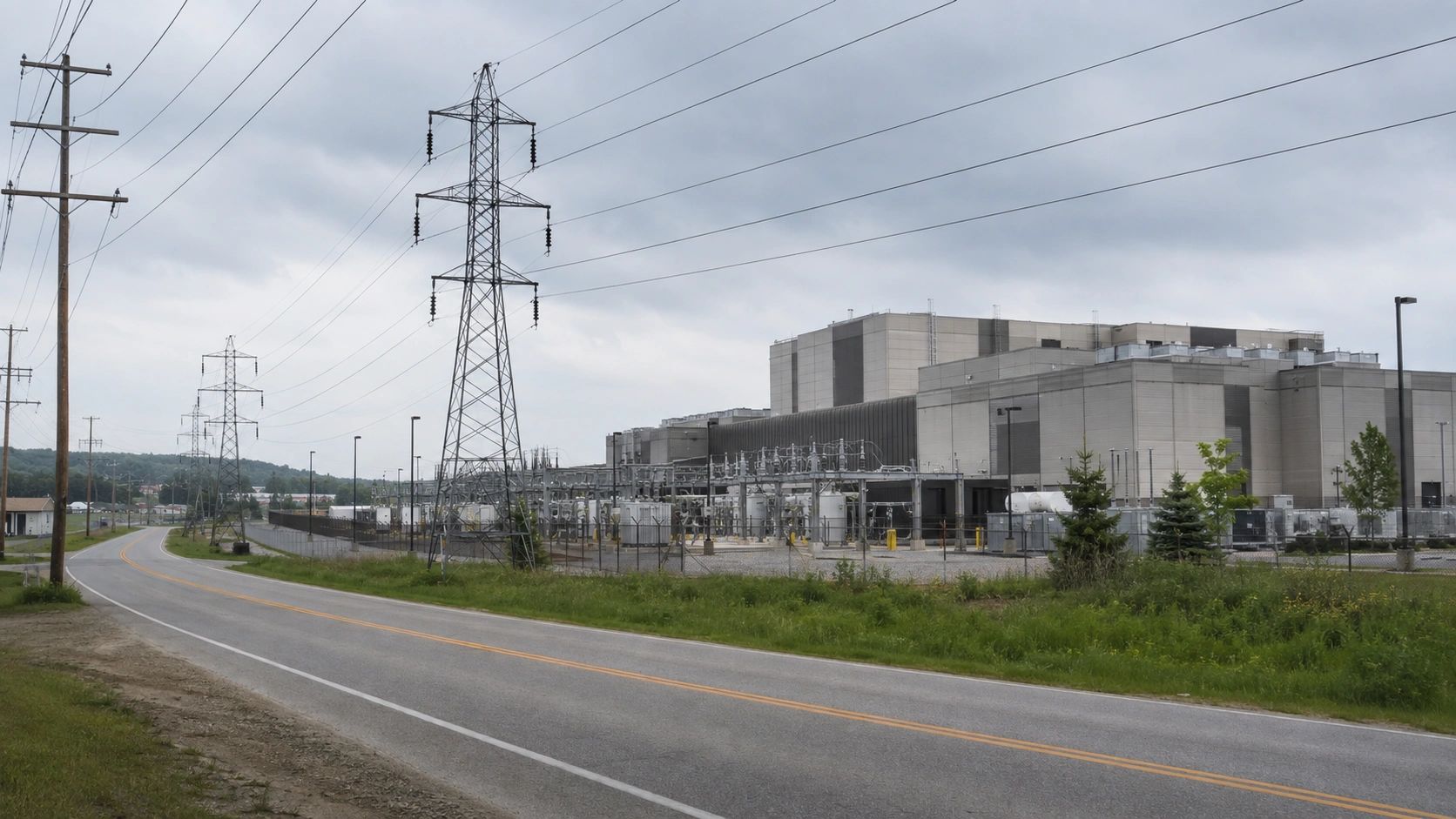
Data centers have moved from county hearing rooms into the 2026 elections.
In Ohio, Democratic Senate candidate Sherrod Brown has made data centers a central line of attack against Republican Senator Jon Husted. Brown has spent millions portraying Husted as “the face of data centers in Ohio.” Axios reported that a private National Republican Senatorial Committee memo warned leading AI companies that the backlash was damaging Husted and could spread to other races.
That does not mean data centers will decide control of the Senate. It does show that electricity costs and local development disputes can now be turned into effective campaign arguments.
Ohio is the clearest example, but it is unlikely to remain an isolated one. Governors and candidates in other states are confronting the same combination of ratepayer anxiety, local opposition, and concern about corporate influence. If the strategy proves effective in Ohio, campaigns elsewhere will take notice.
The industry is also becoming a force in national politics. Reuters reported in August that AI companies, executives, and affiliated political groups have committed substantial resources to influencing the 2026 elections, often supporting competing approaches to AI policy.
The industry has accumulated political power. Its next challenge is establishing political legitimacy.
AI leadership requires physical infrastructure
Artificial intelligence may appear to the public as software, but American AI leadership depends on land, energy, transmission, construction, cooling systems, and data centers.
The scale of the requirement is substantial. Lawrence Berkeley National Laboratory estimates that data centers could account for approximately 11.8 percent of United States electricity consumption by 2030, with scenarios ranging from 9.5 percent to 15.3 percent.
Those estimates cover data centers broadly, not AI alone. Actual demand will depend on efficiency, utilization, equipment deployment, and which proposed projects are built. Even with those qualifications, the direction is clear.
The United States cannot maintain AI leadership without substantially more computing and electricity capacity. That capacity will affect military operations, intelligence, cybersecurity, scientific research, manufacturing, and competition with China. It cannot be built at the required pace through slow permitting, uncertain utility processes, or fragmented rules that change from one jurisdiction to another.
This is why the Trump administration is right to treat AI infrastructure as a national economic and security priority.
Executive Order 14318 directs federal agencies to expedite qualifying projects through the Federal Permitting Improvement Steering Council, improve environmental review, identify brownfield and Superfund sites for reuse, and make appropriate federal lands available for data center and energy infrastructure.
The objective is sound. America needs more electricity generation, transmission capacity, and data centers. The question is how to build them without creating opposition strong enough to slow the broader effort.
What is driving the resistance
The strongest opposition is not based on a general environmental case against data centers. It is based on cost, control, and trust.
According to a June 2026 Reuters and Ipsos poll, 57 percent of respondents would oppose a data center in their community, while 77 percent were concerned that AI driven data centers would increase electricity prices. The concern crossed party lines.
Electricity is the most serious issue because data center demand can require new generation, transmission, substations, and distribution equipment. The important question is not merely whether data centers pay their current utility bills. It is who finances the new infrastructure and who bears the risk if projected demand is delayed, reduced, or abandoned.
The Virginia Joint Legislative Audit and Review Commission found that data centers were paying their allocated cost of service under existing rates. It also concluded that continued growth could increase costs for other customers as utilities build new generation and transmission. Its independent analysis estimated that a typical Dominion Energy residential customer could face an additional $14 to $37 per month in generation and transmission costs by 2040, measured in constant dollars.
That is more precise than claiming data centers are simply refusing to pay their bills. The political vulnerability comes from future infrastructure costs, electricity scarcity, and the risk that households or small businesses could become responsible for investments made to serve exceptionally large private customers.
Secrecy compounds the problem. Nondisclosure agreements, private incentive negotiations, and late public notice create the impression that major decisions have already been made before residents are invited to participate. Claims about thousands of jobs can further weaken trust when most of the employment is temporary construction work rather than permanent operations.
Environmental and quality of life concerns remain relevant, but most are specific to the site and facility design. Water availability, noise, traffic, backup generation, and residential compatibility can be addressed through clear siting standards and ordinary permitting. These issues require competent review. They do not justify a presumption against data center development.
The central political problem is legitimacy.
Political power is the ability to influence a government decision. Legitimacy is the public belief that the decision was reached through a fair process and distributes costs and benefits reasonably.
Campaign spending, federal streamlining, and state preemption can help secure approvals. None can make an unfavorable utility arrangement fair or a poorly selected site compatible with nearby homes.
Pennsylvania offers a warning and a model
Pennsylvania Governor Josh Shapiro’s August 18 executive order shows how quickly public pressure can produce a more demanding state response.
Pennsylvania Executive Order 2026 05 removes AI data centers from the state’s expedited permitting program. It directs the Pennsylvania Department of Environmental Protection to incorporate the Governor’s Responsible Infrastructure Development requirements into permit reviews and requires developers to make legally enforceable commitments through consent orders and agreements.
The order also strengthens public disclosure, rejects government nondisclosure agreements for these projects, gives local approval greater weight, and directs state officials to pursue utility rules that protect other customers from data center costs. It calls for data centers to pay applicable interconnection costs and seeks to prevent certain costs from being transferred to other customers if a developer becomes insolvent or cannot meet its obligations.
This is not an unqualified pro development policy. Removing every AI data center from the state’s expedited process may slow responsible projects along with speculative ones. Some of the order’s environmental language is broader than necessary.
But Shapiro has recognized the basic political problem more clearly than many other officials. Continued development now requires enforceable commitments on electricity costs, community approval, transparency, workforce benefits, and project credibility. Voluntary promises are no longer enough.
The stronger approach would retain an expedited path for projects that meet those requirements. Pennsylvania should not simply make data centers harder to build. It should use its standards to distinguish serious projects from proposals that rely on speculative demand, public cost shifting, or political access.
A better bargain for faster development
The United States needs a development framework in which stronger commitments earn greater speed and certainty.
First, growth should pay for growth.
Large customers should accept enforceable responsibility for the infrastructure built primarily to serve them. Utility tariffs and contracts can require minimum payments, deposits, financial security, direct payment for interconnection costs, and protection against stranded investments.
The Federal Energy Regulatory Commission has ordered all six regional grid operators under its jurisdiction to justify or reform their large load tariffs. The commission is examining cost shifting, transmission cost transparency, service for flexible loads, and the financial responsibility of customers requesting major new infrastructure.
These protections are not hostile to development. They remove the strongest argument that households are subsidizing some of the world’s wealthiest companies.
Second, credible projects should receive priority.
A developer seeking expedited treatment should demonstrate site control, financing, an identified operator or customer, a realistic schedule, a workable power supply plan, and financial security for infrastructure commitments. Projects that fail defined milestones should lose their place in utility queues.
This would keep speculative requests from distorting load forecasts while allowing construction ready projects to move more quickly.
Third, state and local responsibilities should be clear.
States should establish standards for electricity costs, water availability, project disclosure, financial security, and utility planning. Local governments should retain authority over siting, setbacks, noise, traffic, lighting, and compatibility with surrounding development.
That local role should be meaningful but bounded. Published criteria, decision deadlines, and appeal procedures can prevent local review from becoming indefinite obstruction. Projects that satisfy the standards should receive a presumption of approval within a defined period.
Fourth, economic benefits should be specific.
Data centers can generate substantial tax revenue and construction investment. Loudoun County reports that data centers occupy approximately 4 percent of its commercial parcels while producing approximately 38 percent of its general fund revenue.
Not every community will reproduce that result. Developers should present project specific estimates for tax revenue, incentives, construction employment, permanent employment, infrastructure requirements, and public service costs. Workforce or community commitments should include measurable obligations, reporting, and consequences for nonperformance.
A charitable contribution cannot compensate for a weak underlying agreement.
Federal speed and local legitimacy can coexist
Executive Order 14318 focuses on federal permitting. It does not generally eliminate state utility authority or local zoning. But the processes can still come into tension.
The order encourages faster federal review, broader use of the Fast 41 process, reuse of brownfield and Superfund sites, programmatic environmental consultations, and development on appropriate federal lands. These measures can shorten project timelines and reduce unnecessary delay. They can also reduce the time available for local engagement if developers wait until federal decisions are advanced before approaching the host community.
The administration should make clear that faster federal processing does not require late local consultation. Sponsors receiving expedited federal treatment should disclose their power requirements, infrastructure needs, local fiscal effects, and community engagement plans early in the process.
This would not give local governments authority over federal decisions or create a new veto. It would allow federal review and local planning to proceed at the same time. Streamlining should compress government processing, not the opportunity to identify problems before they become political crises.
The political test begins before a project is announced
The practical lesson for industry is straightforward. Political legitimacy must be established during project development, not assigned to a communications team after opposition has formed.
Before announcing a site, developers should secure credible power arrangements, identify the responsible customer, model public infrastructure effects, and prepare a defensible explanation of local revenue and employment. Utilities, state regulators, and local officials should be engaged before the project becomes a public controversy.
Investors and contractors also need to look beyond land control and construction schedules. A project’s viability increasingly depends on whether its power request is credible, its rate structure protects other customers, its local approvals are obtainable, and its public commitments can be met.
Trade associations can help by developing common project standards, model utility protections, transparent economic reporting, and credible engagement practices. Generic campaigns about the benefits of AI will have limited value if the underlying projects leave basic questions unanswered. Public messaging can explain a fair arrangement. It cannot create one after the decisions have been made.
Regardless of the outcome in Ohio, the campaign has already demonstrated that data center development can become a political liability when questions about costs and local benefits remain unanswered.
America needs more data centers. Projects that can prove they are serious, pay the costs they create, and give host communities a credible role should be allowed to move faster. Projects that depend on secrecy, inflated promises, or political override will make America’s larger AI agenda harder to sustain.